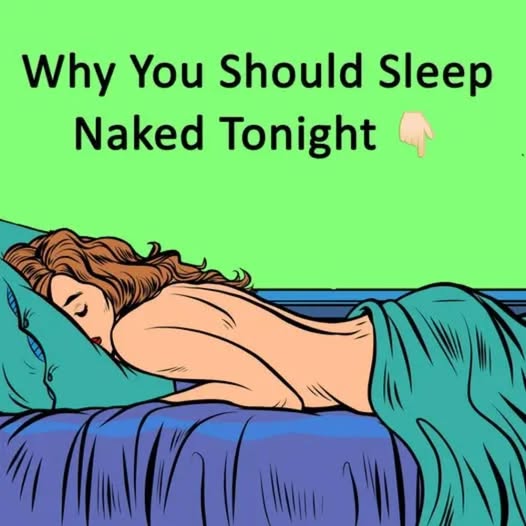
Sleeping naked sounds like a joke people make when they’re trying to be bold or funny, but the truth is simpler and far more practical: your body actually benefits from it. Not in some mystical way, not in a life-changing miracle sense—just basic physiology doing what it’s wired to do when you stop piling on unnecessary layers. Most people don’t think twice about what they wear to bed, but clothing can absolutely interfere with sleep quality, body temperature, hormonal balance, and even emotional well-being. Strip the idea down to its core, and you’re left with a surprisingly straightforward fact: sleeping without clothes can make your nights calmer, deeper, and healthier.
Your body spends all day wrapped in fabric, adjusting constantly to shifting temperatures—offices too cold, cars too warm, jackets on and off. When you crawl into bed in pajamas, your body has to regulate itself again, and the added fabric traps heat you don’t need. That’s why so many people wake up drenched in sweat halfway through the night or feel chilled the moment the blanket slips off. Sleeping naked allows your body to maintain a steady thermal state, closer to what it experiences naturally. Instead of fighting with fluctuating temperatures, your system stays in a consistent range that supports uninterrupted rest. Your skin breathes, your body cools efficiently, and you avoid the overheated tossing and turning that knocks you out of deep sleep cycles.
Temperature stability isn’t just about comfort; it ties directly into how your hormones operate while you sleep. Melatonin, often called the “sleep hormone,” works best when your body cools slightly at night—the cooling signals your brain to shift into sleep mode. Layers of clothing slow this transition. When you sleep naked, the body cools as intended, allowing melatonin production to rise and stabilize without interference. A balanced melatonin rhythm leads to longer, higher-quality REM cycles, better brain restoration, and fewer mornings where you feel like you barely slept. This isn’t some fringe theory; your circadian rhythm depends on temperature as much as it depends on light and darkness.
Then there’s oxytocin—the hormone of bonding, connection, emotional warmth. When skin touches skin, oxytocin releases more easily. You don’t need a scientific journal to tell you that closeness feels different when nothing is between you and your partner. The warmth of another person’s skin creates a physical and emotional connection that pajamas simply can’t replicate. Couples who sleep nude often report feeling more intimate, more trusting, and more relaxed around each other. It isn’t about sex; it’s about contact. Oxytocin reduces stress, improves mood, and strengthens bonds. Something as simple as falling asleep next to someone without layers can quietly reinforce the foundation of the relationship.
Stress itself plays a huge role in why many people sleep poorly. Cortisol—the stress hormone—rises when the body gets too warm, especially at night. Warm environments trick the brain into reacting as if it’s under pressure. Sleeping naked prevents overheating and helps keep cortisol levels stable. Lower cortisol means less nighttime anxiety, fewer racing thoughts, and a calmer nervous system. Combine that with the psychological sense of freedom that comes from being unburdened by clothes, and you create a sleep environment that feels safer, quieter, and more mentally restful. Many people describe sleeping naked as liberating, not because of the lack of clothes, but because their body finally feels unconfined, relaxed, and unhindered.
There’s also the simple benefit of improved circulation. Without fabric pressing into your waist, chest, legs, or shoulders, your blood flows more freely. Even loose clothing can restrict circulation in small ways—waistbands, elastic cuffs, tight shorts, bra straps, even seams can interrupt the natural movement of blood and lymph through the body. Sleep is when your system restores itself, and unrestricted circulation means muscles recover more efficiently, inflammation reduces faster, and your whole body wakes up feeling less stiff and more refreshed.
A deeper sleep does more than give you energy. It supports immunity, balances mood, sharpens cognition, and stabilizes appetite. When you sleep better, your body regulates hunger hormones properly, meaning you’re less likely to wake up craving heavy food or feel foggy and irritable throughout the day. Your body handles stress better, your memory improves, and your reaction time sharpens. All that from simply letting the body rest the way it was designed to.
Beyond the biological benefits, sleeping naked changes the emotional tone of bedtime. Clothes carry associations of daytime obligations—work, schedules, responsibilities. Removing them creates a clear mental signal: the day is over, and rest begins now. It’s a small ritual that shifts your mindset. You strip away the day, literally and symbolically, and allow yourself to start fresh.
Some people worry about hygiene or modesty, but the truth is simple: your sheets are meant to be washed regularly, and bodies—clothed or not—release sweat, oils, and skin cells. Sleeping naked doesn’t make things messier; it just removes unnecessary layers. If anything, it keeps your body cleaner since your skin can breathe better and stay dry instead of trapping moisture under fabric.
When you put all these pieces together—temperature regulation, hormone balance, reduced stress, improved circulation, deeper sleep—it becomes obvious why so many people swear by sleeping nude. It’s not a trend or a gimmick. It’s a low-effort, no-cost way to support your physical and emotional well-being. And once people try it, many never go back because the difference is that noticeable.
It’s easy to dismiss something so simple, but simplicity is the point. You don’t need gadgets, supplements, expensive bedding, or routines that require apps and alarms. Just take off your clothes and let your body do what it’s built to do. If you struggle with sleep, if stress follows you into the night, if you wake up groggy despite spending eight hours in bed, this might be the easiest change you haven’t tried yet.
After understanding all of this, it’s hard to find a reason not to sleep naked. Comfort improves. Stress drops. Rest deepens. Your relationships can even strengthen. It’s a minor shift with an outsized impact. For those who don’t sleep well, it’s worth trying at least once. You might be surprised at how quickly your body adapts—and how much better your nights feel because of it.