-
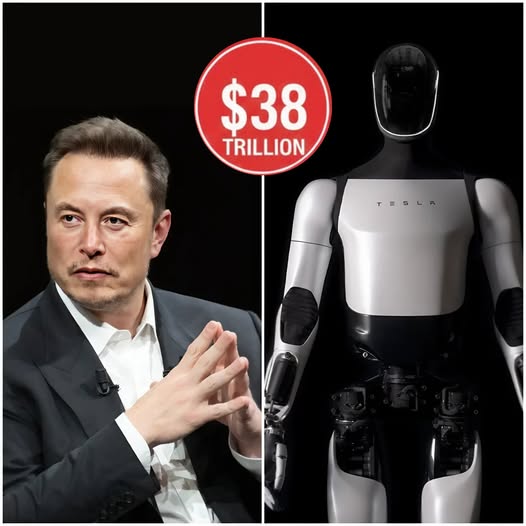
Billionaire Elon Musk has made a bold claim regarding the United States’ staggering national debt, which has now surpassed $38 trillion. According to Musk, the only viable solution to this crisis lies in the widespread deployment of artificial intelligence (AI) and robotics, which could dramatically boost productivity and output, reshaping the American economy in the process.
Speaking on the podcast “Another Conversation with Nikhil Kamath” on November 30, Musk emphasized that the U.S. is facing a debt level that is, in his words, “unreasonably high.” He pointed out that interest payments alone now exceed the entire U.S. military budget, and these costs are expected to rise further in the near future. “I truly believe that only AI and robots can resolve this debt situation,” Musk asserted, highlighting the urgency of finding technological solutions to economic challenges.
Musk’s comments come at a time when discussions about AI, automation, and the future of work are dominating global economic discourse. He believes that AI and robots can increase productivity so dramatically that they could lead to deflation—a reduction in the general price level of goods and services—by outpacing the growth of the money supply.
“When AI and robots are producing goods and services at scale, we will likely see significant deflation. That makes sense, because you cannot expand the money supply fast enough to match the increase in production,” Musk explained. This suggests that, in his view, automation is not just a productivity tool but a potential mechanism for stabilizing the economy and even transforming the financial system itself.
Musk was also asked why inflation in the U.S. remains above the Federal Reserve’s 2% target. His response focused on the current limits of AI-driven productivity. “AI has not yet accelerated production fast enough to exceed the growth of the money supply. The U.S. is adding roughly $2 trillion in deficit spending, and production has to outpace that to avoid inflation,” he said. He further predicted that this turning point is likely to occur within the next three years or sooner, when the production of goods and services will finally outstrip money supply growth.

The Tesla and SpaceX CEO also offered a vision of a radically transformed economy in which AI and robots could potentially produce almost everything: from chips and solar panels to the raw materials required to build more robots. “At some point, when AI and robots are creating chips, solar panels, and extracting resources to build more AI and robots, we are moving beyond traditional monetary systems,” Musk said. In this scenario, money may become largely irrelevant as technology drives production on an unprecedented scale.
This futuristic vision, according to Musk, could render the concept of nation-states increasingly obsolete. “I’m talking about a future where nations, as we understand them, may become outdated,” Musk said. He stressed that this is not a plan he is personally implementing but rather an outcome that will likely occur naturally if civilization continues to advance. “This is what I see happening based on current trends. It will happen with or without me. As long as civilization progresses, we will have AI and robots at very large scales.”
Economists and financial experts have noted that while Musk’s predictions may sound extreme, they raise important questions about the role of AI in economic growth. The U.S. national debt is indeed at historically high levels, and traditional fiscal measures such as tax increases or spending cuts may not be sufficient to stabilize the economy. Musk’s focus on AI suggests a more radical, technology-driven solution that relies on increasing the supply of goods and services at a scale previously unimaginable.
The implications of Musk’s vision are profound. If AI and robotics can truly increase productivity to the extent he predicts, it could reshape the labor market, reduce the cost of living, and redefine the global economic order. However, critics warn that relying on AI and robots to resolve a $38 trillion debt raises concerns about employment, wealth distribution, and ethical governance. Who controls the AI? How are the benefits distributed? And what happens to human labor in a world dominated by machines?
Musk’s forecast also touches on the concept of “technological deflation,” a scenario in which the rapid increase in production reduces prices significantly, potentially neutralizing some effects of debt and inflation. While this is still largely theoretical, recent advances in AI and automation lend some credibility to his claims. Robotics, combined with AI, could indeed transform manufacturing, logistics, and service industries, producing goods and services more efficiently than human labor alone.
Moreover, Musk envisions a feedback loop where AI and robots help create the tools and infrastructure to produce even more AI and robots. This compounding effect could accelerate economic transformation, making traditional concepts of money and debt increasingly irrelevant. In his view, the debt crisis may eventually be overshadowed by technological abundance, as the cost of production declines and productivity rises exponentially.
In conclusion, Elon Musk’s prediction highlights the potential of AI and robotics to not only address economic challenges but to fundamentally reshape the global financial system. While $38 trillion in national debt may seem insurmountable today, Musk argues that technology could provide a pathway to sustainable growth and prosperity. As the deployment of AI and robotics continues to expand, economists, policymakers, and the public will be closely watching whether Musk’s bold forecast becomes a reality—or remains a visionary, albeit speculative, prediction.
You are not connected to the internet.
https://www.youtube.com/watch/Y1wR5q116Z4
Elon Musk Says AI and Robots Are the Only Way to Solve America’s $38 Trillion Debt Crisis