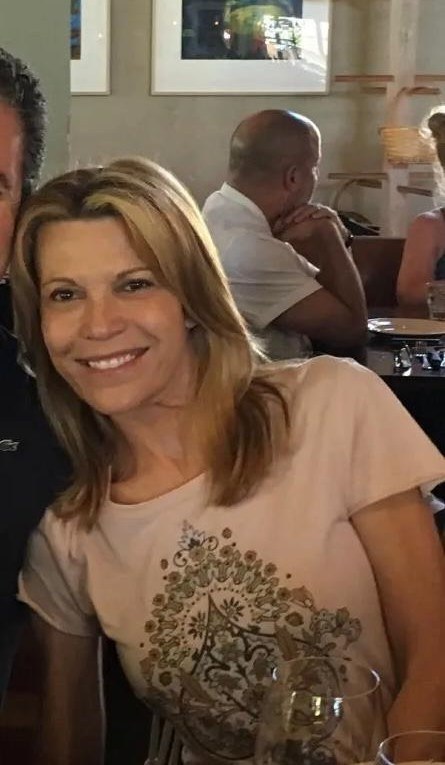
In the ever-evolving world of American television, few figures represent continuity quite like Vanna White. For more than four decades, she has been a steady presence on Wheel of Fortune, navigating sweeping changes in media, technology, and audience expectations with remarkable composure. While millions recognize her instantly, White has long maintained a clear boundary between her professional visibility and her private life—a balance that has become increasingly rare in modern celebrity culture.
Throughout her career, White has been known not only for her on-screen elegance but also for her deliberate discretion off camera. In an era when public figures are often encouraged to share every detail of their lives, she has chosen a quieter path. This approach has allowed her to remain a familiar and trusted presence to viewers while keeping her personal world grounded and protected.
Over time, that private world has included a long-term relationship with John Donaldson, a contractor and real estate developer. Their relationship, which began in the early 2010s, developed away from public spectacle and media attention. Rather than announcing milestones or engaging in publicity, the pair allowed their partnership to grow organically, outside the rhythms of the entertainment industry.
Donaldson’s professional life exists largely outside of Hollywood, and that separation appears to have been a stabilizing factor. Familiar with demanding work schedules and long-term projects, he brings a grounded sensibility that complements White’s career. The two share an apparent preference for privacy, focusing on daily life rather than public appearances, and maintaining a low profile even as White continues her high-visibility role on television.
Those who have observed the couple over the years often point to their normalcy as a defining feature. They attend select events when appropriate but avoid unnecessary attention. Their interactions suggest comfort and familiarity rather than performance—an ease that typically comes from years of shared experience and mutual respect. For White, this consistency has provided a reliable personal foundation alongside a historic professional run.
In recent years, she has occasionally offered small, measured glimpses into her personal happiness through brief interviews or social media posts. These moments are rare and understated, reinforcing the sense that what she shares is intentional rather than performative. For longtime viewers, these glimpses are not about curiosity or gossip, but reassurance—that someone who has brought nightly joy to millions has also found fulfillment in her own life.
The longevity of their relationship underscores a broader point about modern fame: privacy is not something celebrities lose by default, but something they can actively choose to protect. White’s career demonstrates that it is possible to remain deeply recognizable without becoming fully exposed. Her ability to separate the public role from the private individual has allowed both to endure.
As she continues into the next chapters of her career, White does so with the confidence that comes from stability beyond the studio. Her story offers a counterbalance to the often-chaotic narratives associated with long-term fame. It suggests that fulfillment does not require constant visibility, and that lasting relationships often thrive best when they are lived rather than displayed.
After decades spent revealing letters to audiences around the world, Vanna White has quietly constructed a life that is defined not by spectacle, but by trust, longevity, and intention. It is a reminder that some of the most meaningful successes are the ones we choose to keep out of view—steady, enduring, and entirely our own.