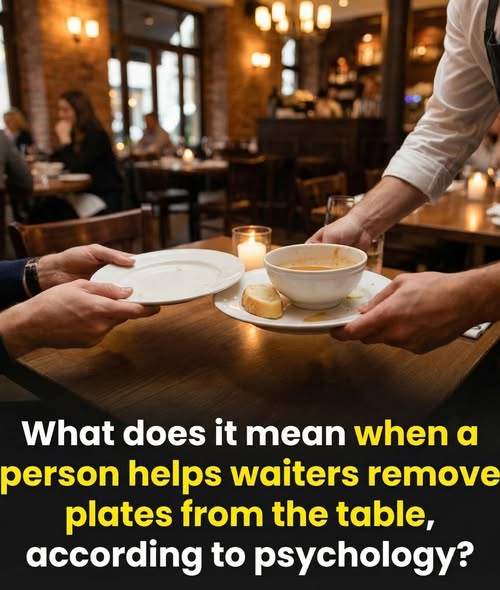
In the lively setting of a restaurant—where conversations overlap, dishes clatter, and servers weave between tables—tiny acts of kindness can stand out. One of the most noticeable is when a diner quietly lends a hand by stacking a few plates or clearing a bit of space for the waiter. Though simple, these gestures reflect a natural instinct toward cooperation. In places where people often focus solely on their own meal, those who help demonstrate an awareness of how their small actions can lighten someone else’s load and contribute to a more comfortable shared environment.
Experts say this kind of behavior often comes from recognizing the effort involved in hospitality work. Many people who instinctively assist have either worked in service roles themselves or simply appreciate the demands of the job. When diners neatly gather plates or organize items without being prompted, the intention isn’t to rush the meal—it’s to show respect and gratitude. Instead of viewing dining as a purely transactional experience, they treat it as a brief exchange where kindness flows both ways. These moments align with prosocial behavior: thoughtful actions meant to help others without expecting acknowledgment.
This willingness to help also suggests emotional awareness and social comfort. People who notice subtle cues—a waiter balancing multiple tasks, a crowded tabletop, or a moment where assistance would be meaningful—often respond in a way that feels natural and considerate. Their timing is gentle rather than disruptive, and the gesture comes from internal motivation rather than a desire for praise. Research indicates that those who engage in such quiet acts of kindness are often guided by personal values and humility, recognizing that offering help, no matter how small, contributes to a shared sense of respect.
Of course, behavior varies widely, and those who don’t assist are not necessarily uncaring. Cultural norms, personal boundaries, and past experiences all shape how individuals behave in public spaces. What matters most is the intention behind the action. When help is offered sincerely, it eases stress, strengthens brief human connections, and contributes to a more positive atmosphere. In an industry where servers often navigate fast-paced expectations, even a small gesture of cooperation can serve as a meaningful reminder that kindness frequently reveals itself in everyday moments.