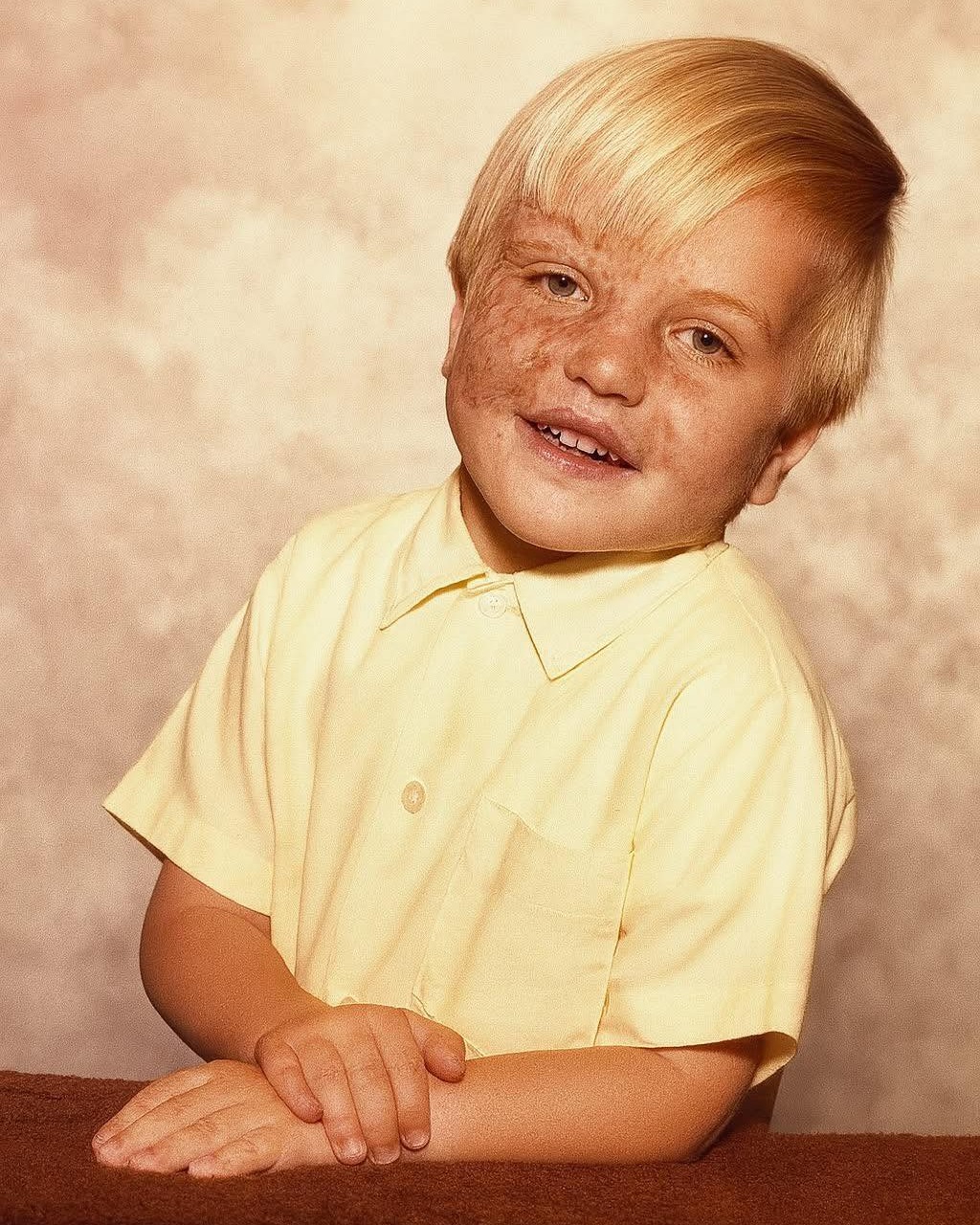
At fourteen months old, Keith Edmonds came closer to death than most people ever will in an entire lifetime. In a moment of unthinkable violence in 1978, his mother’s boyfriend pressed the toddler’s face against an electric heater, inflicting catastrophic third-degree burns that destroyed nearly half of his face. Doctors warned his family to prepare for the worst. Survival was uncertain, and even if he lived, they said, his life would be permanently altered. Keith lived. And that survival became the opening chapter of a story defined not by cruelty, but by resilience, transformation, and purpose .
The years that followed were anything but gentle. Keith spent much of his childhood in and out of hospitals, particularly at the Shriners Burn Institute in Cincinnati, where surgeons performed procedure after procedure in an effort to restore basic function and appearance. Each operation came with pain, fear, and the emotional toll of growing up knowing you look different in a world that rarely handles difference with kindness. Childhood, for Keith, was shaped by sterile hallways, recovery rooms, and the quiet realization that life had asked far more of him than it asks of most children.
Outside the hospital walls, stability remained elusive. He entered the foster care system and waited for reunification with his mother, while learning that the man who nearly killed him received only a ten-year prison sentence. That knowledge lingered like an open wound. At school, the scars on his face drew stares, whispers, and sometimes outright cruelty. Children can be merciless, and Keith learned early how isolation feels when your appearance becomes the first thing people see.
By his teenage years, the weight of trauma, pain, and unresolved anger began to surface in dangerous ways. At just thirteen, Keith turned to alcohol as a way to numb what he couldn’t articulate. That coping mechanism followed him into adulthood, intertwining with depression, addiction, and a growing sense that survival alone was not the same as living. His twenties were marked by internal battles invisible to most, yet relentless in their intensity.
Then, on July 9, 2012—his 35th birthday—everything shifted. In the middle of a drinking binge, Keith experienced a moment of clarity that would redefine the rest of his life. He realized he was tired of running from his pain. Tired of letting his past dictate his future. He made a decision that day to get sober and rebuild himself from the ground up. It wasn’t dramatic. It wasn’t public. It was deeply personal—and it worked.
Sobriety became the foundation on which Keith rebuilt his life. With discipline and determination, he entered the corporate world, first working in sales at Dell and later joining The Coca-Cola Company. There, he quickly distinguished himself, earning top honors and eventually being entrusted with one of the most challenging inner-city routes in Detroit. In environments where trust is earned, not given, Keith excelled. People sensed authenticity in him. The scars on his face told a story before he ever spoke—a story of endurance, honesty, and lived experience.
But professional success alone wasn’t enough. Keith understood that his survival carried responsibility. In 2016, he transformed his personal pain into collective purpose by founding the Keith Edmonds Foundation, a nonprofit dedicated to empowering abused and neglected children. His mission was clear: no child should feel unseen, discarded, or defined solely by trauma.
One of the foundation’s flagship initiatives, Backpacks of Love, provides foster children with essential items during their first days in care—clothing, hygiene products, and personal belongings that offer dignity in moments of upheaval. Another program, Camp Confidence, pairs survivors with mentors and creates safe spaces where children can build self-esteem, resilience, and trust. Keith is adamant that his work is not performative charity. “We don’t just show up and disappear,” he says. “We walk alongside them.”
The impact is immediate and profound. Educators, counselors, and community leaders have witnessed tangible change in children who once struggled with hopelessness. A high school principal in Tennessee described it plainly: students believe Keith because he never minimizes their pain. He doesn’t offer empty platitudes. He shows them what survival looks like when it’s paired with accountability and compassion. One young girl, teetering on the edge emotionally, met Keith and his wife, Kelly, and emerged transformed—more confident, more hopeful, and visibly lighter.
Keith understands that connection deeply. “Some people carry their scars on the inside,” he says. “I carry mine on the inside and the outside.” His commitment to sobriety, service, and forgiveness is not abstract. It’s deliberate. He knows where his attacker lives today. He has chosen not to seek him out. Forgiveness, Keith explains, does not excuse harm or erase memory. It frees the person who has been carrying the weight.
His relationship with his mother, though complicated, has also evolved. The years were not easy, but Keith chose to let healing take precedence over resentment. That decision, like sobriety, was ongoing—not a single moment, but a series of choices. Eventually, he wrote his story down in a memoir titled Scars: Leaving Pain in the Past, not to relive trauma, but to offer proof. Proof that the worst moment of your life does not get to author the rest of your story.
Today, Keith Edmonds stands as a powerful example of post-traumatic growth, addiction recovery, and purpose-driven leadership. His life speaks directly to conversations around childhood abuse prevention, mental health awareness, foster care reform, and long-term trauma recovery. He is not polished or perfect. His journey is not tidy. But it is real.
From a toddler fighting for breath to a man handing hope back to others, Keith’s life is defined by the choice to transform suffering into service. Every time a child receives a backpack, finds a mentor, or hears, “I’ve been where you are,” his scars fulfill a role they were never meant to have. They heal.