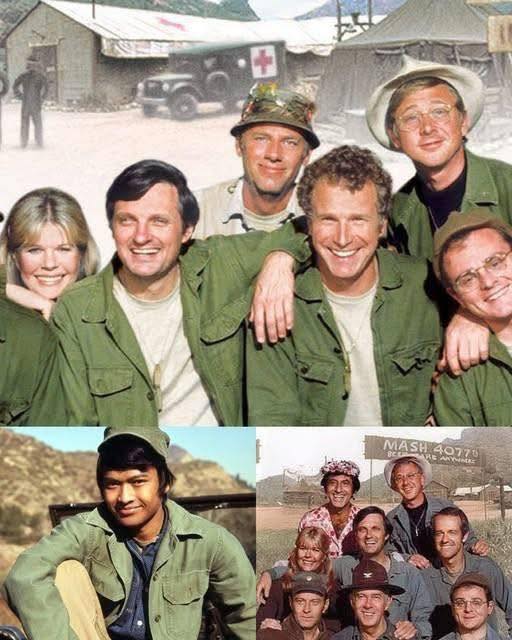
Patrick Adiarte’s passing at the age of 82 closes a chapter that was never given the volume it deserved. He was a familiar face to millions, yet his name rarely carried the weight of the impact he made. A performer shaped by war, migration, and quiet resilience, Adiarte moved through American popular culture during a time when visibility for Asian and Filipino actors was limited, conditional, and often fleeting. His death, following long-standing health struggles, invites a deeper reckoning with a life that mattered far beyond the brief moments of fame it contained.
Born in the Philippines during the chaos of World War II, Patrick Adiarte’s earliest memories were formed against the backdrop of survival. War was not an abstraction for him; it was lived experience. That early exposure to instability and loss forged a kind of internal discipline that would later define his career. When he immigrated to the United States, he arrived carrying both trauma and possibility, stepping into a country that promised opportunity but rarely extended it evenly. Hollywood, particularly in the mid-20th century, was not built to welcome actors who looked like him, spoke like him, or carried stories that challenged the dominant narrative.
Yet Adiarte found his way in. He appeared in some of the most iconic television productions of the era, including the legendary series MASH*, a cornerstone of American television history and one of the most influential comedy-dramas ever produced. His presence on that show, and on other major network programs, was subtle but significant. In an industry that often reduced Asian characters to caricatures or background noise, Adiarte brought humanity, restraint, and emotional intelligence to every role he touched. He did not shout his importance; he embodied it.
Fame, however, proved to be a fragile and unreliable companion. Like many performers of color in classic Hollywood, Adiarte encountered the limits of an industry that celebrated diversity in theory but resisted it in practice. Roles slowed. Opportunities narrowed. The applause faded. For many, that silence would have been devastating. For Adiarte, it became a turning point.
Rather than chasing dwindling recognition or clinging to nostalgia, he redirected his energy toward something more enduring. He stepped away from the camera and into the dance studio, the rehearsal space, the classroom. There, he found a different kind of legacy. As a teacher and mentor, Patrick Adiarte influenced generations of dancers and performers, many of whom may never have fully known the breadth of his own journey. What they absorbed instead was his discipline, his honesty, and his insistence that movement and expression could be acts of survival as much as art.
This transition from screen to studio was not a retreat; it was a reclamation. Teaching allowed Adiarte to control a narrative that Hollywood never quite handed him. He offered young artists what he himself had been denied: patience, visibility, and respect. In an era before diversity and inclusion became high-value keywords in entertainment media, he practiced them quietly and consistently, shaping lives one class at a time.
His story resonates today because it mirrors broader conversations about representation in Hollywood, Asian American history, and the hidden costs of fame. Patrick Adiarte belonged to a generation of performers who opened doors without ever being allowed to walk fully through them. His career sits at the intersection of classic television history, immigrant resilience, and the often-overlooked contributions of Filipino Americans to the arts. These are narratives now recognized as culturally and historically valuable, but during his prime, they were rarely acknowledged.
In recent years, renewed interest in classic television series and Hollywood’s golden age has sparked deeper analysis of the performers who existed on the margins of stardom. Adiarte’s work has quietly benefitted from that reassessment. Clips circulate. Credits are reexamined. Viewers ask questions they never asked before: Who was he? Where did he come from? Why didn’t we hear more? The answers reveal as much about the industry as they do about the man.
Despite personal challenges and declining health in his later years, Adiarte remained grounded. He did not seek public sympathy or attempt a late-career reinvention. Those close to him describe a man at peace with his choices, aware of both the limits and the meaning of his life’s work. He understood that legacy is not always measured in awards, box office numbers, or social media metrics. Sometimes it lives in memory, in influence, in the quiet confidence passed from teacher to student.
Patrick Adiarte’s death may not dominate headlines the way modern celebrity losses do, but that absence is telling. It reflects the same systemic patterns that shaped his career: visibility without permanence, recognition without security. Yet to frame his life through loss alone would be a mistake. He survived war. He crossed continents. He stood on stages that were not designed for him and made space anyway. He taught when teaching mattered more than performing. He endured.
In an age obsessed with instant fame and viral relevance, Adiarte’s story feels almost radical. It reminds us that cultural impact does not always announce itself loudly. Sometimes it persists quietly, waiting for a moment when the world is finally ready to listen.
Patrick Adiarte may no longer be here, but his imprint remains embedded in the fabric of television history, dance education, and the broader story of immigrant contribution to American culture. His name may not always be spoken, but his influence continues to move—through bodies in motion, through stories retold, through doors that stay open because someone once stood in them and refused to disappear.